Modern Arts
40 years of manufacturing great design
Get a Custom Reusable Bag QuoteGreen Eco-Friendly Shopping Bags


Custom Printing and Large Order Green Bags

Click here for custom printed 3,000 or more

In stock Green Shopping Bags

Click here for in stock printed or unprinted
Rush Delivery!


More In Stock Reusable Green Shopping Bags Below


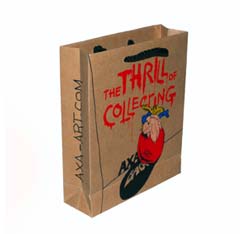
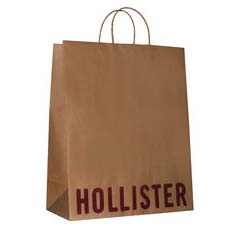
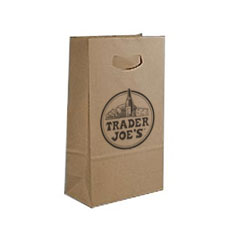
Recycled Natural Kraft Paper Bags

100% Recycled Natural Kraft Paper Bags

Reuseable Tote Bags

Reusable Tote Bags

Reusable Nylon & Mesh Tote Bag

Reusable Nylon & Mesh Tote Bag

Reusable Cotton Twill Tote Bag

Reusable Cotton Twill Tote Bag


The Three "R" s
There are three steps you can take RIGHT NOW to make sure your choices for retail green packaging -- boxes and reusable shopping bags -- help our environment instead of hurting it.

1. Choose REUSABLE bags - this is, without question, the most important thing you as a retailer can do to reduce the burden on our environment of packaging and on materials, transport fuel etc.  And you get a marketing benefit as well.  Your customers will appreciate your commitment to the environment AND they will re-use the bag in which they carry your products home.  Next time they visit your store they'll bring your reusable shopping bag back with them -- and this reduces your cost of retail packaging overall.

2. Choose POST-consumer materials - let us supply you with bags, boxes and other packaging made from recycled materials such as NON-WOVENs and PET.  This is the second-most important thing you can do NOW to help the environment.

3. Recycle Your Bags/Boxes - set up a spot in your store where your customers can return your packaging at the end of its useful life.  Then make the commitment to get the used-up bags and boxes to a recycling facility.

4. Re-Design Your Packaging -- make sure your bags, boxes and all packaging are efficiently sized and made of renewable materials appropriate for the use and function. Whenever possible, use new stronger materials such as PET Nonwoven or Tyvec. 

5. Mix materials - do not mix materials, as an example plastic lamination on paper

6. Use Degradable Materials - if your packaging can't be reused by your customers and must be thrown away, make sure it will degrade without harming the environment.  This is not a perfect solution but it helps; ideally, your packaging should be RE-USABLE AND DEGRADABLE.

PAPER:

If you use paper in your eco-friendly packaging, be aware that ENVIRONMENT FSC-certified papers are most desirable.  They are available in many recycled fiber options.  From most to least desirable they are:

  • FSC 100% RECYCLED FIBER PAPERS
  • FSC 80% MIXED SOURCES
  • FSC 50% RECYCLED (ALTERNATIVE FIBER PAPERS), and
  • FSC 30% MIXED SOURCES.

FSC certified suppliers use paper produced by sustainable systems including forests that are managed and harvested in a planned and sustainable manner: 

FSC’s mission is to promote and enhance well-managed forests through credible certification that is environmentally responsible, socially acceptable and economically viable.

In order to use any FSC trademarks -- including the FSC logo, the initials "FSC", or the phrase "Forest Stewardship Council" on a printed piece, the printer (who is usually  the last step in the chain of custody) must have chain-of-custody certification. On-product logos can be obtained only from an FSC-certified printer.  Without this certification, no claims can be printed regarding the FSC-certified content of the paper.   This is a helpful site:

http://www.neenahpaper.com/

Another important step is to use minimal or no chlorine bleach to whiten Kraft paper.

PLASTIC:

"Re-use" and "Recycle" are the keys to any long-range solution and that means YOU should stock and use bags made with recycled content, degradable bags and reusable bags.

A critical part of this is a recycling/collection program.  "BRING IT BACK" recycling kits offer your customers a closed loop system to collect plastic bags and return them to a facility for recycling.

Plastic has many benefits when properly used.  It is strong, durable, versatile, lightweight, safe and inexpensive.  It is an oil-refining by-product that would otherwise be wasted.  Nobody is importing oil merely to make plastic products.

The problem with plastic, as identified by governments and NGOs around the world, is that it lasts too long if it gets into the environment (especially the oceans).

Symphony has found the answer to this problem.  An additive put into the plastic at the extrusion stage makes the finished product "oxo-biodegradable" so that it will degrade and disappear sooner, leaving no fragments, no methane and no harmful residues.

Please be aware that "degradability" is not actually a disposal option; you can still re-use and recycle degradable plastics.  But degradability IS low-cost insurance against the accumulation of plastic waste in the environment.

There is little or no on-cost, because Oxo-degradable plastics are made with the same machinery and workforce as traditional plastic.  There is no need to change suppliers.

Oxo-biodegradable Polyolefin Plastics

Some scientists have focused on bio-based and hydro-biodegradable plastics technologies.  Another group has focused on developing additive technologies that work with ordinary polyolefin plastics in a two-step process to accelerate oxidation.  This means the used plastic products will completely degrade, disintegrate and mineralize / biodegrade. The prodegradant additive controls these processes in a highly predictable, controllable manner in all conditions in the environment in which you find a source of oxygen and naturally occurring microorganisms (air, soil, landfill, compost, litter). This two-step process is now commonly referred to as “oxo-biodegradation”.

Modified EcoSafe® products meet the requirements of ASTM D3826, which is the standard for degradable plastics.  All the requirements of D6400-99 for biodegradable/compostable plastics are met except for the period of mineralization.  EcoSafe® products modified by this ASTM D6964-04 Oxo-biodegradable technology will mineralize (convert carbon to carbon dioxide) at a slower rate similar to many plant tissues commonly found in compost.

Biodegradable products are engineered to degrade and totally fragment in 90 to 120 days.  About 60% mineralize within 12 to 24 months when disposed of in a well-managed commercial compost facility.

Degradable products are engineered for disposal in a landfill and under these conditions will degrade and fragment at a slower rate (12 to 18 months).

RECYCLED SYSMBOLS:

The recycled symbol, also known as the chasing-arrows logo or the mobius loop, is visible on many consumer products, including paper. All recycled papers from Neenah Paper contain a minimum of 30% post consumer recycled fiber. Papers made with 100% post consumer recycled fiber are available in the four popular finishes of the CLASSIC® Brands and ENVIRONMENT® Papers.

Used alone the recycling symbol communicates that a paper product or package is both recyclable and made entirely from recycled material. As few products or packages can make both claims, use of the symbol alone is limited. In most cases, the recycling symbol must be accompanied by qualifying statements to clarify the intended claim.


Products made from 100% recycled fiber should use either of the following symbols:


Products made with less than 100% recycled fiber should use the recycling symbol as shown below. The symbol should be accompanied by a legend identifying the total percent (by weight) of recycled fiber.


ENVIRONMENTAL SYMBOLS:


Forest Stewardship Council™ (FSC)

Green Seal™

Green-e

Carbon Neutral

Recycling Symbol

Processed Chlorine Free